Best Lung Supplements Compared: Ingredients, Dose and Cost: Single Ingredient vs Blends
Quick Answer: What Makes the Best Lung Supplements Stand Out in 2026?
The best lung supplements in 2026 are not defined by a brand name but by four checkable traits: fully disclosed amounts on the label, ingredients matched to a real need, third-party testing, and a sensible cost per day. Single-ingredient NAC products give a clear, verifiable dose; multi-ingredient blends like PureLung's 600 mg of eleven ingredients trade dose size for variety and convenience. Pick by your goal, not a ranking.
- For a targeted dose: a single-ingredient product you can verify.
- For broad daily support: a disclosed multi-ingredient blend.
- Always check: testing, cost per day, and what a smoker should avoid.
How to judge the best lung supplements without a marketing lens
Rankings of the "best lung supplements" usually rate confidence, not evidence. To compare fairly, drop the star ratings and score every product on four things you can actually verify. Disclosure: does the label publish an amount for each active, or hide them inside a proprietary blend total? Dose: are the ingredients present at amounts studies actually used, or trace sprinkles? Testing: is there third-party or independent lab verification of identity and purity? Value: what is the real cost per day once you account for serving size and subscriptions? Every honest comparison below runs through those four filters, and so should any product you are weighing yourself.
The biggest fork in this whole category is structural: single-ingredient products versus multi-ingredient blends. They are not better or worse than each other in the abstract — they solve different problems. Get that distinction right and most of the confusion in "best lung supplement" listicles simply dissolves.
Single-ingredient NAC products
N-acetylcysteine, or NAC, is the most-studied single ingredient in respiratory support. It is a glutathione precursor with a long history of use as a mucolytic, associated with thinner, easier-to-clear mucus (Cochrane review of mucolytic agents, 2019), and it is typically sold at 600 mg per capsule — the amount used twice daily in the largest COPD exacerbation trial of it (PANTHEON trial, Lancet Respiratory Medicine, 2014). The appeal of a single-ingredient NAC product is transparency: you know precisely how much you are taking, you can hit the amounts the research used, and you can verify it against the label without arithmetic. Cost per day is usually low, often well under a dollar.
The trade-off is narrowness. You get one compound and one mechanism; anything else you want — vitamin D, antioxidants, botanicals — you buy and manage separately. That is fine if you have a specific, targeted goal, and less convenient if you want broad everyday support in a single capsule. NAC is the reference point every blend is implicitly competing with, which is why it anchors the comparison table below.
Multi-ingredient blends
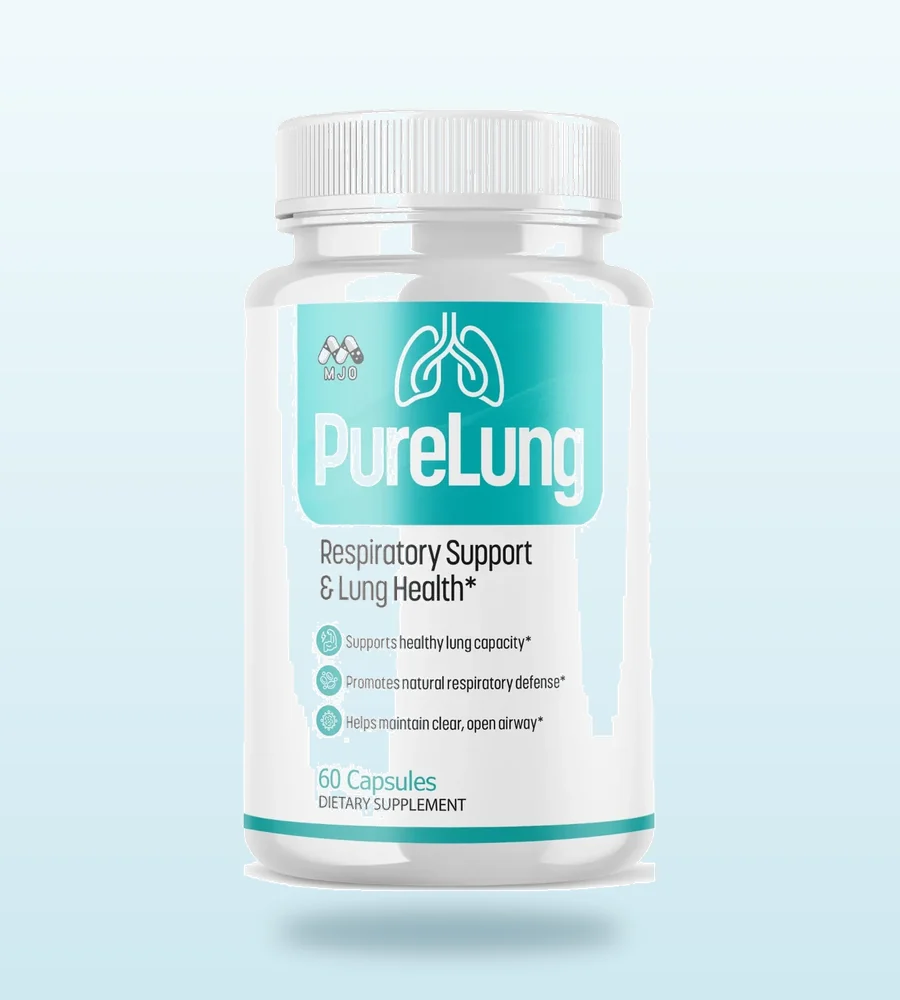
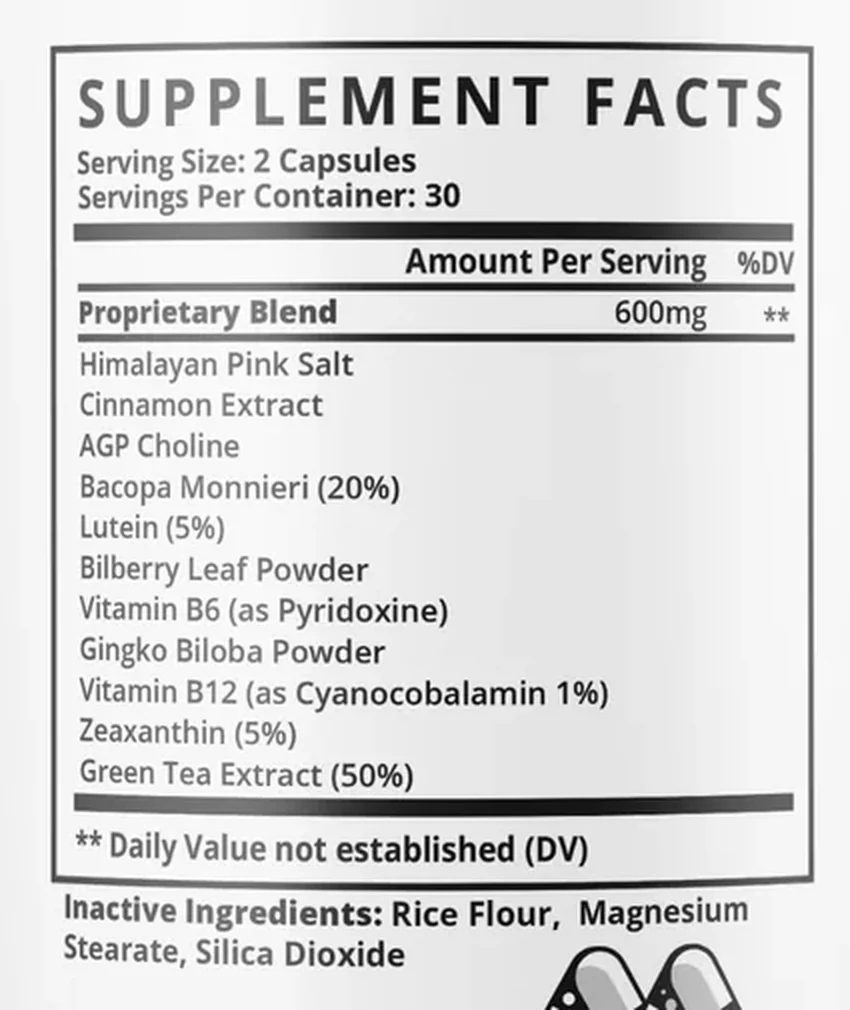
The other broad category is the blend: a single capsule carrying many ingredients, usually inside one total weight. PureLung is a clear example — 600 mg holding eleven ingredients, from salt and botanicals to eye carotenoids and B vitamins. The pitch is convenience and coverage: one product, many supportive nutrients, a single daily habit. For people who would not otherwise assemble and manage a shelf of separate bottles, that is a genuine, honest benefit.
The catch is dose dilution and disclosure. When eleven ingredients share one 600 mg total, the average per-ingredient amount is small, and a proprietary blend declares only the total, so you often cannot see exactly how much of each you are getting. That is not automatically bad — many of these nutrients work at modest, adequacy-level amounts — but it does mean a blend rarely delivers a clinical dose of any one thing. We worked through that maths in detail in what a 600 mg blend split eleven ways actually buys you, and it is the single most useful lens for reading any blend label.
See a disclosed blend before you compare it
The only way to judge a blend is to read it in full. PureLung's eleven ingredients are transcribed on the main page in descending order, so you can weigh it against a single-ingredient NAC product with your own eyes rather than ours.
See the Current PureLung OfferThe side-by-side comparison
Here is the category laid out across the four filters. The products are archetypes rather than one specific brand each, so you can locate whatever you are actually looking at against them.
| Type | Ingredients & dose | Testing to look for | Typical cost/day | Best suited to |
|---|---|---|---|---|
| Single-ingredient NAC | One active, ~600 mg, fully disclosed | Third-party purity and identity | Low, often under $0.50 | Targeted mucus-comfort goal |
| Vitamin-led formula | Vitamin D, C, E at disclosed amounts | USP or NSF where available | Low to moderate | Correcting nutrient shortfalls |
| Herbal respiratory blend | Botanicals in a proprietary total | Often limited; check for it | Moderate | Traditional-herb preference |
| Multi-ingredient blend (e.g. PureLung) | 11 ingredients in one 600 mg blend | Check manufacturer facility and testing claims | Moderate | Broad, low-dose daily support |
| Beta-carotene / high-dose A | Isolated pro-vitamin A, high dose | N/A | Low | Not advised for smokers |
Read the table as a map, not a leaderboard. The "best" row genuinely changes with the buyer: a targeted user is best served by the top row, a diet-gap user by the second, and someone who wants one convenient capsule of broad support by the PureLung-style blend. The bottom row is the one universal caution, and it matters most to exactly the audience that shops this category hardest.
Third-party testing: the quiet differentiator
Supplements are not approved by the FDA before sale, so the label is a claim, not a guarantee. That is what makes independent verification the most underrated line in any comparison. Look for third-party marks such as USP or NSF, or a manufacturer that publishes lot-level certificates of analysis confirming identity, potency and the absence of contaminants. A product made in a GMP-certified, FDA-registered facility is a reasonable baseline — but note that "FDA-registered facility" describes the premises, not an endorsement of the product, a distinction a lot of marketing blurs on purpose.
When two products look similar on ingredients and price, testing is often the honest tie-breaker. It is also the trait most likely to be missing from cheap, heavily-marketed blends, which is precisely why it is worth checking before the front-of-box promises win you over.
Cost per day beats sticker price
A $25 bottle is not cheaper than a $45 bottle if the first is a 20-day supply and the second lasts 60. Convert everything to cost per day before you compare, and factor in the two things that quietly move the real price: multi-bottle deals, which lower per-day cost but raise upfront spend, and auto-ship subscriptions, which can be convenient or can be a trap depending on how easy they are to cancel. Most lung supplements land somewhere between roughly 20 and 60 dollars a month; a single-ingredient NAC product typically sits at the low end, and multi-ingredient blends usually run higher for the convenience of combining actives.
Value, though, is cost per day set against disclosed dose and testing — not the lowest number in isolation. A slightly pricier product with published amounts and third-party verification can be better value than a bargain blend that tells you nothing. Cheap and unverifiable is not a saving; it is a smaller bet on an unknown. Working a specific product's pack price back to a per-day figure is the same exercise every time; our PureLung cost and where-to-buy breakdown shows it done end to end on one listing.
The best lung supplement is not the one with the loudest claim or the longest ingredient list. It is the one whose label you can fully read, whose doses make sense for your goal, and whose price per day you would still accept after the marketing wore off.
Which suits smokers, and which to avoid
This is where a comparison stops being academic. If you smoke or recently quit, the most important entry in any ranking is a warning rather than a recommendation. Two large randomised trials found more lung cancer among smokers taking high-dose beta-carotene (ATBC trial, New England Journal of Medicine, 1994; CARET trial, New England Journal of Medicine, 1996), so isolated high-dose beta-carotene and high-dose vitamin A products belong on your avoid list, full stop. We treat that finding seriously enough to have given it a dedicated explainer on why beta-carotene warrants caution for smokers, and it is the first thing a smoker should screen any label for.
Beyond that avoid-first rule, smokers are best served by fully disclosed labels, sensible antioxidant support such as vitamin C (requirements are higher in smokers), and third-party testing. And the honest caveat that outranks every product: no supplement offsets smoking. The interventions that actually change outcomes — stopping smoking, exercise, clean air, medical care for symptoms — sit far above any capsule in this comparison, and any page selling one to a smoker should say so plainly.
Putting the comparison to work
Turn all of this into a two-minute buying routine. First, decide your goal: a targeted single-ingredient dose, correction of a diet gap, or broad daily support in one capsule. Second, screen the label for full disclosure and, if you smoke, for beta-carotene and high-dose vitamin A. Third, check for third-party testing or lot-level certificates. Fourth, convert the price to cost per day and judge it against the disclosed doses. If a product clears all four, it is a defensible buy for you specifically, whatever a listicle ranks it. If you want a structured version of that screen, our walkthrough on how to choose a lung supplement without falling for the hype turns it into a checklist.
Run PureLung through the same routine rather than taking anyone's word for it. It is a broad, lower-dose daily blend — eleven ingredients in 600 mg — that suits someone who wants convenient coverage rather than a clinical dose of one thing, and notably it carries no beta-carotene or retinol, which is a point in its favour for the smoker audience. Whether that trade fits you is exactly the kind of judgement this comparison is meant to let you make with your own eyes.
Related reading
Medical note: general information only, not medical advice, and not a substitute for talking to a clinician. Lung supplements are not intended to diagnose, treat, cure or prevent any disease. No supplement offsets smoking; new or worsening cough, breathlessness, chest pain or blood in sputum needs medical assessment.
Scientific references
- NIH Office of Dietary Supplements — How to evaluate dietary supplement claims
- Poole P et al. — Mucolytic agents versus placebo for chronic bronchitis or chronic obstructive pulmonary disease. Cochrane Database of Systematic Reviews, 2019 (PMID 31107966)
- NIH Office of Dietary Supplements — Vitamin A and the smoker caution
- USP — Dietary Supplement Verification Program
- Mayo Clinic — Quit smoking guidance and resources
Compare PureLung on its own label, line by line
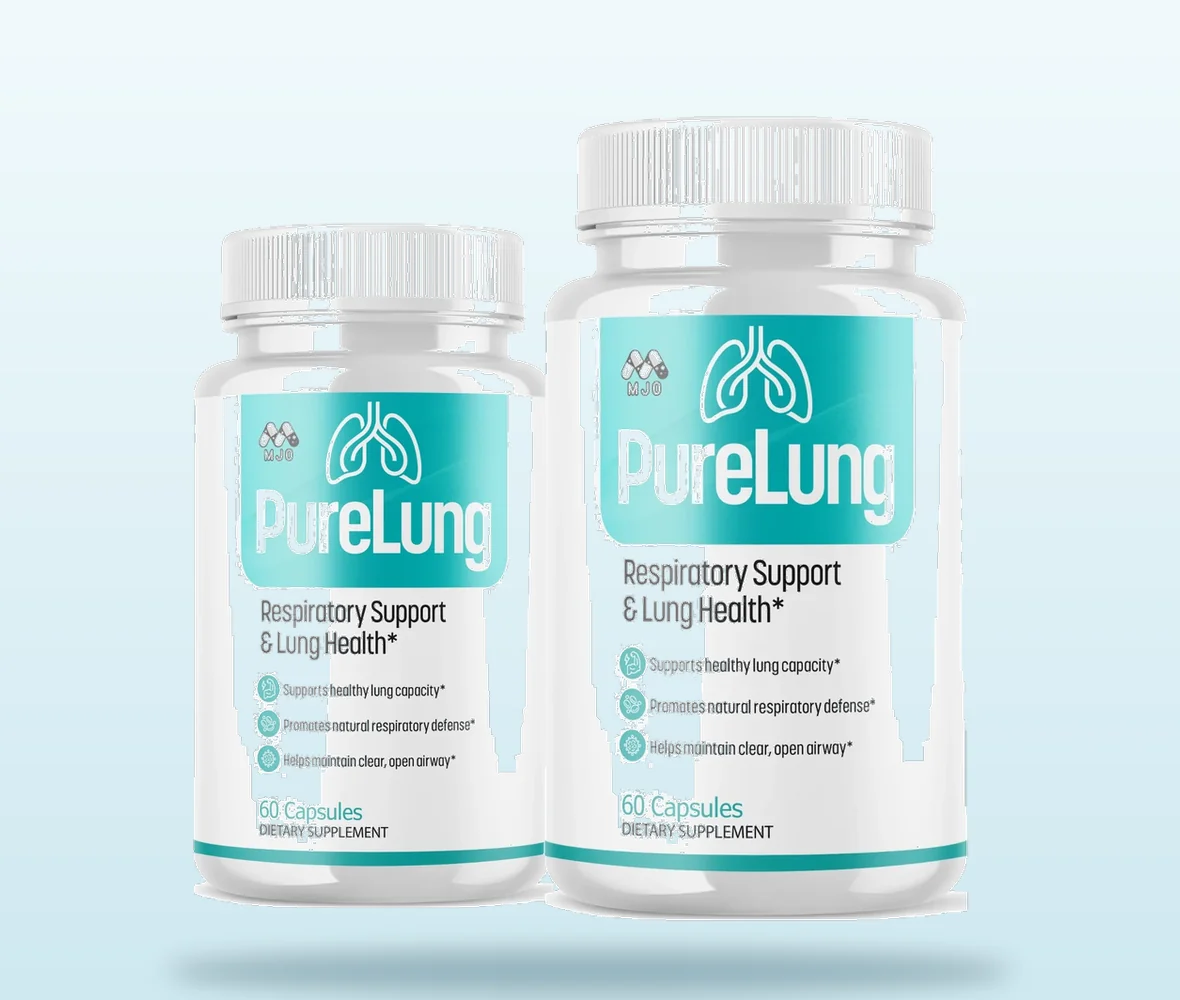
Eleven ingredients inside one 600 mg blend, transcribed in full on our main page — check the current PureLung price and offer at the official store, then run it through the four filters above.
Check PureLung Availability