How to Choose a Lung Supplement: A Six-Point Checklist
How Do You Choose a Lung Supplement Without Getting Sold?
Choose a lung supplement by ignoring the banner and reading the panel. Favour products with disclosed per-ingredient doses, third-party testing (a COA) and GMP manufacturing, and evidence-backed ingredients like NAC, vitamin D and mullein. If you smoke, avoid high-dose beta-carotene. A four-week trial then tells you whether it earns a reorder.
- Read first: the Supplement Facts panel, not the sales headline.
- Demand proof: disclosed doses, GMP facility and a certificate of analysis.
- Prioritise: ingredients with a real file — NAC, vitamin D, vitamin C, mullein.
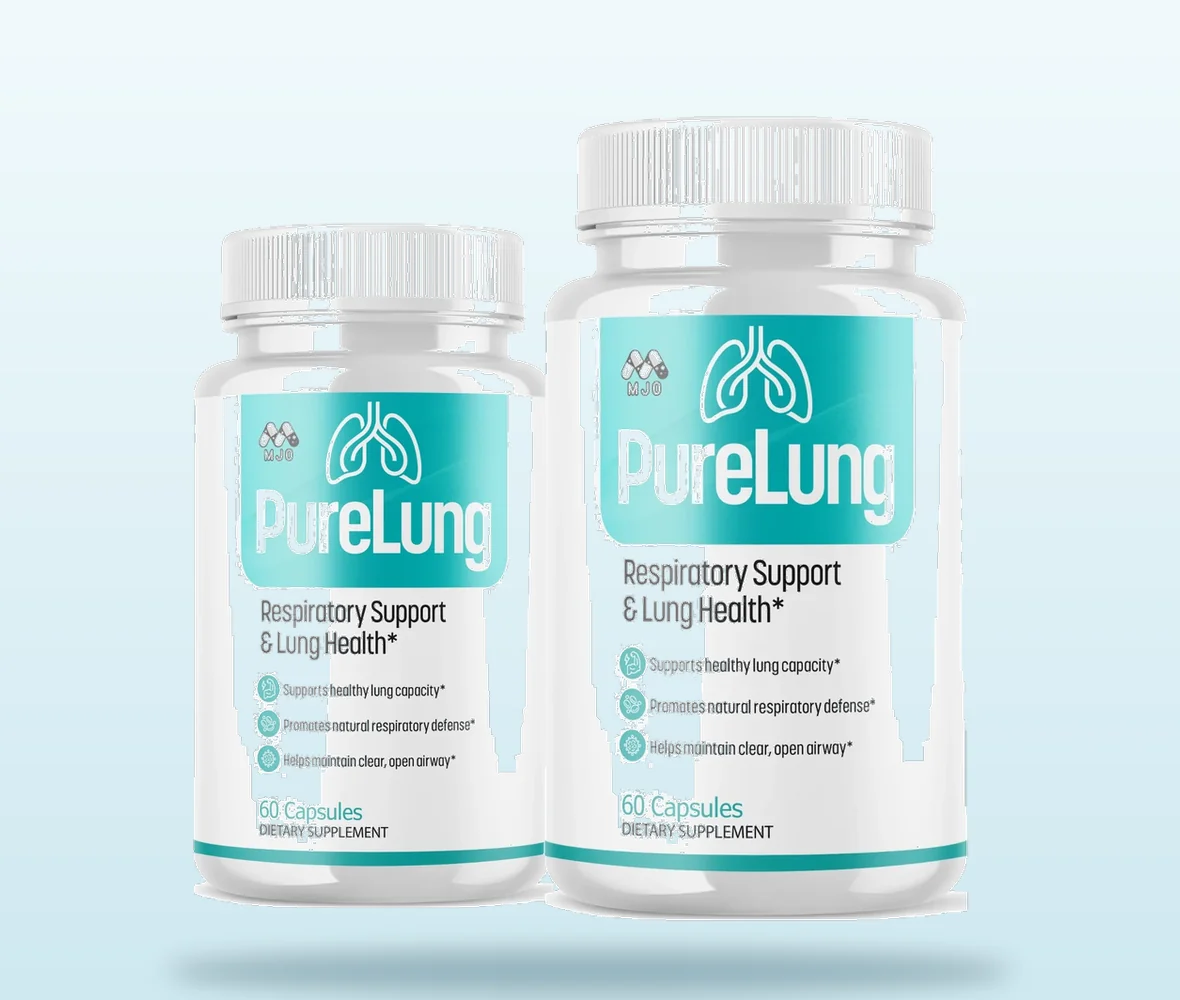
Searching for lung supplements is a strange experience. Every product page sounds confident, every ingredient list looks impressive, and every headline promises the same clean, easy breathing. When everything reads as a winner, price becomes the only thing you can compare on — which is exactly what the loudest marketers want. The good news is that a handful of checks separate a serious formula from a well-designed banner, and none of them requires a science degree.
This guide is a buying framework, not a ranking. The aim is to make you a confident, informed buyer who can look at any bottle — PureLung included — and decide in a few minutes whether it deserves your money. We will move from the label, to the proof behind it, to the ingredients worth prioritising, to the safety notes that too many pages leave out.
Why choosing a lung supplement feels so hard
The category is confusing by design, not by accident. Respiratory supplements occupy a legal grey zone: they can suggest they "support" breathing but cannot claim to treat a disease, so the copywriting drifts toward mood words — cleanse, renew, breathe freely — that sound powerful while promising nothing measurable. On top of that, most brands use "proprietary blends" that hide the amount of each ingredient behind a single total, which conveniently prevents you from checking whether any dose is meaningful.
The result is a shelf where products are hard to tell apart on substance and easy to tell apart on marketing spend. Your job is to reverse that: to grade each product on the substance it tries to hide and discount the marketing it wants you to weigh. Everything below is built to do exactly that.
Start with the label, not the promise
Turn the bottle around before you read a single word of the sales copy. The Supplement Facts panel is the one part of the packaging that is legally standardised and hard to spin, which is precisely why it is worth more than the entire front of the box.
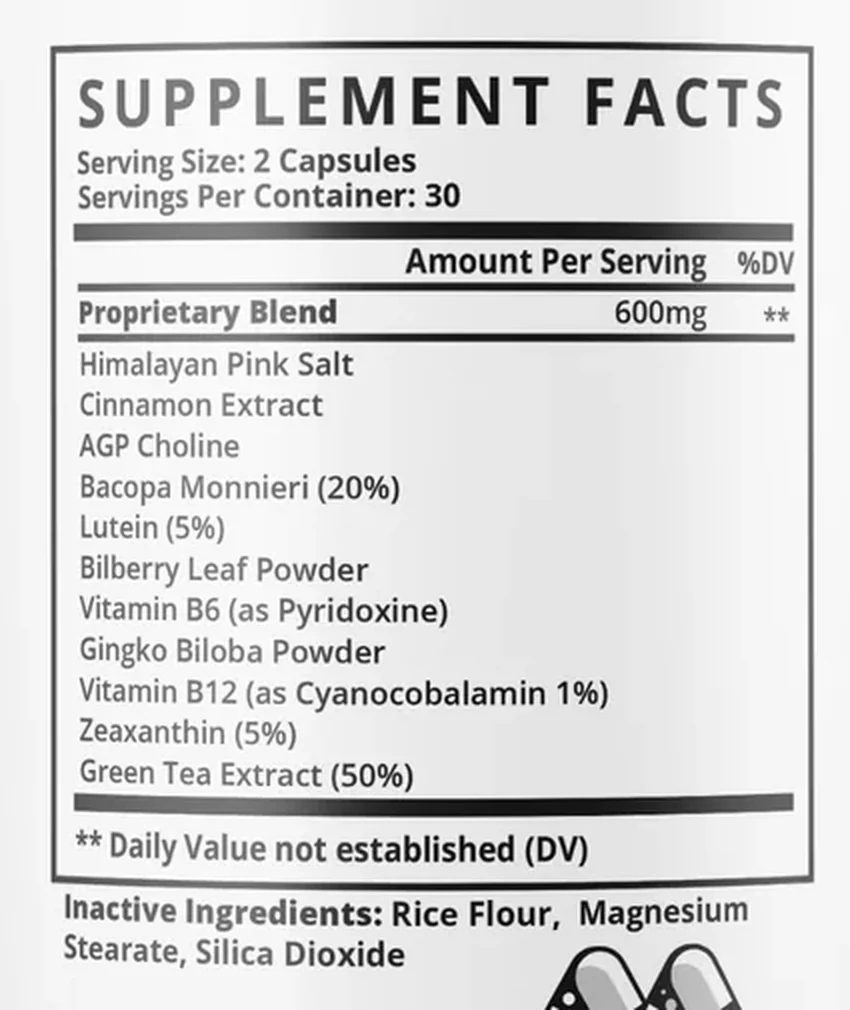
Your first question is whether the amounts are disclosed per ingredient. A transparent label lists each active with its own milligram figure. A "proprietary blend" gives you one number for the whole mix — say 600 mg across eleven ingredients — and leaves you unable to tell whether the ingredient you care about is a serious dose or a sprinkle. Blend components must at least be listed in descending order of weight, so position becomes the only clue you get: an ingredient near the end of a long blend is present in a small amount, full stop. We take that arithmetic apart in detail in our look at a 600 mg blend split across eleven ingredients, which is the single most useful thing to read before you trust any long ingredient list.
None of this means a proprietary blend is automatically bad. It means a blend gives you less information, and you should price that uncertainty in. If two products cost the same and one discloses its doses while the other hides them, the transparent one has already earned an edge.
Proof it is what it says: COA, GMP and third-party testing
A label is a claim. The proof behind the claim comes from three things worth knowing by name.
GMP manufacturing. "Good Manufacturing Practice" is a set of quality-control standards for how a supplement is made — cleanliness, consistency, accurate dosing between batches. A product made in a GMP-certified facility is not guaranteed to work, but it is far more likely to actually contain what the label says in the amount it says. Look for "GMP-certified" or an NSF/GMP mark rather than the vaguer "made in an FDA-registered facility," which only means the premises are on a list.
A certificate of analysis (COA). This is a lab document confirming a batch's identity, potency and purity — that the ingredients are what they claim to be and that contaminants like heavy metals and microbes are within safe limits. The best brands publish COAs or send them on request. A company that cannot or will not show you one is asking for trust it has not earned.
Independent third-party testing. A COA from the manufacturer's own lab is useful; verification from an independent lab is better, because the tester has no stake in the result. Third-party testing is the gold standard, and while not every honest product carries it, its presence is a strong positive signal. Regulatory action alone is not a substitute: an analysis in JAMA, 2022 found supplements named in FDA warning letters often stayed on sale afterwards.
Put a real product through the checklist
The fastest way to learn this framework is to apply it. Pull up an actual ingredient panel, check the blend total and the ordering, and see how the manufacturing and guarantee claims hold up. Start with the current PureLung offer and read it against everything above.
See the Current PureLung OfferThe ingredients worth prioritising
A formula is only as good as the compounds inside it and the amounts they are used at. A short list of respiratory ingredients has an actual literature; the rest run mostly on tradition. Here is the honest hierarchy.
| Ingredient | Why it earns priority | The catch |
|---|---|---|
| N-acetylcysteine (NAC) | Best-studied of the group; a mucolytic examined in chronic bronchitis | Studied at 600–1,200 mg/day — more than many whole blends weigh |
| Vitamin D | Low status links to more respiratory infections; correcting a real shortfall helps | Benefit is mostly about fixing deficiency, not topping up when you are fine |
| Vitamin C | Depleted faster in smokers; repletion is sensible | Megadosing has not delivered the respiratory payoff once hoped for |
| Mullein & thyme | Long traditional use for cough and airway comfort | Evidence is largely traditional or in combination products |
| Magnesium | Plausible role in bronchial smooth-muscle relaxation | Most clinical data is intravenous and acute, not oral and daily |
The pattern is worth internalising: the ingredient with the strongest evidence, NAC, is also the one most likely to be underdosed inside a multi-ingredient blend, because studied amounts are large — 600 mg twice daily in the largest trial of it (PANTHEON trial, Lancet Respiratory Medicine, 2014), and gram-level across the Cochrane review of mucolytic agents, 2019. So "contains NAC" on a front label means little; "contains a disclosed, meaningful amount of NAC" means something. For the botanicals, presence is a reasonable-if-modest plus, not a headline. If you want the fuller picture on which natural ingredients have a genuine rationale, our guide to natural supplements for lung health sorts the evidence from the tradition ingredient by ingredient.
A special note for smokers: beta-carotene
This is the one place where choosing the wrong lung supplement can be worse than choosing none, so it deserves its own section rather than a footnote. Two large trials decades ago found that high-dose beta-carotene supplements were associated with a higher rate of lung cancer in smokers and people exposed to asbestos — the opposite of the intended effect. That finding reshaped how the whole field thinks about antioxidant megadosing.
The practical rule is simple. If you smoke or recently quit, scan the label for beta-carotene or high-dose vitamin A and be cautious about supplemental doses well above everyday food amounts. This is not about trace amounts from a balanced diet; it is about concentrated supplement doses. We spell out the specifics, and why "antioxidant" does not automatically mean "safe for smokers," in our caution on beta-carotene in lung supplements for smokers. If you smoke, read that before you buy anything in this category.
Are lung supplements FDA approved?
No, and understanding why protects you from a common marketing trick. The FDA does not review or approve dietary supplements for safety and effectiveness before they go on sale, the way it does for medicines. Supplements are regulated more like food: makers are responsible for safety and honest labelling, the FDA sets manufacturing standards, and the agency can act after the fact against products that turn out to be unsafe or falsely marketed.
This is why the phrase "manufactured in an FDA-registered facility" is close to meaningless as a quality signal — registration describes the building, not any endorsement of the product. "FDA approved" on a supplement is a red flag, because that approval does not exist for this category. A trustworthy brand leans on GMP certification and third-party testing precisely because it cannot honestly claim FDA approval, and it knows the difference.
Do lung supplements have side effects?
They can, and "natural" is not a safety guarantee. NAC can cause nausea or stomach upset in some people. High-dose beta-carotene, as above, is genuinely risky for smokers. Liquorice, a common respiratory herb, can raise blood pressure and lower potassium with heavy or prolonged use. Ginger, green tea and several other botanicals can interact with blood thinners and other prescription medicines, and concentrated green tea extract carries a recognised, uncommon association with liver injury (USP safety review, Toxicology Reports, 2020). None of this makes supplements dangerous in general; it makes them active, which is the whole point of taking them.
The sensible response is not fear but a two-minute habit: read the full ingredient list, note anything you react to, and if you take prescription medication, are pregnant or nursing, or manage a health condition, run the label past a pharmacist before you start. That single conversation catches the large majority of avoidable problems.
A five-minute buying framework
Put it together and choosing a lung supplement becomes a short, repeatable routine.
- Flip the bottle. Read the Supplement Facts panel before any marketing.
- Check disclosure. Are doses listed per ingredient, or hidden in one blend total? Where does the ingredient you care about sit in the order?
- Demand proof. GMP-certified facility, a certificate of analysis, ideally independent third-party testing.
- Prioritise evidence. Reward NAC, vitamin D, vitamin C and sensible botanicals; discount cleanse language and proprietary-blend padding.
- Screen for your situation. Smoker? Watch beta-carotene. On medication? Check interactions. Allergic to a listed herb? Skip it.
- Trial, then decide. Give it a fair four-week run, judge honestly, and only reorder if it earned it.
Run any product through those six steps and the marketing stops mattering. Applied to PureLung, the panel is a single 600 mg blend across eleven ingredients with no per-item amounts, so steps two and four rely mostly on ingredient order — which is exactly the kind of honest limitation the framework is built to surface. We set out the full transcription and what the ordering implies on our main PureLung page.
Medical note: general information only, not medical advice. If you have asthma, COPD, a persistent cough, unexplained breathlessness or any diagnosed lung condition, manage it with a clinician. Do not stop or replace prescribed treatment with a supplement, and check with a pharmacist before adding one alongside medication.
Scientific references
- US FDA — How dietary supplements are regulated
- NIH NCCIH — Dietary and herbal supplements
- Poole P et al. — Mucolytic agents versus placebo for chronic bronchitis or chronic obstructive pulmonary disease. Cochrane Database of Systematic Reviews, 2019 (PMID 31107966)
- NIH Office of Dietary Supplements — Vitamin D fact sheet
- National Cancer Institute — Beta-carotene and lung cancer risk in smokers
Related reading
Apply the framework, then check the terms
Eleven ingredients, one 600 mg blend total, transcribed in full — then confirm current availability, guarantee and return window at the official store.
Check PureLung Availability